
Home
›
Project portfolio
›
Peniup
|
732 ha
Restored
|
65,000+
ACCUs issued to date
|
100 yrs
Permanence obligation
|
[XX species]
Native species planted
|
Gondwana Link
Wildlife corridor
|
|
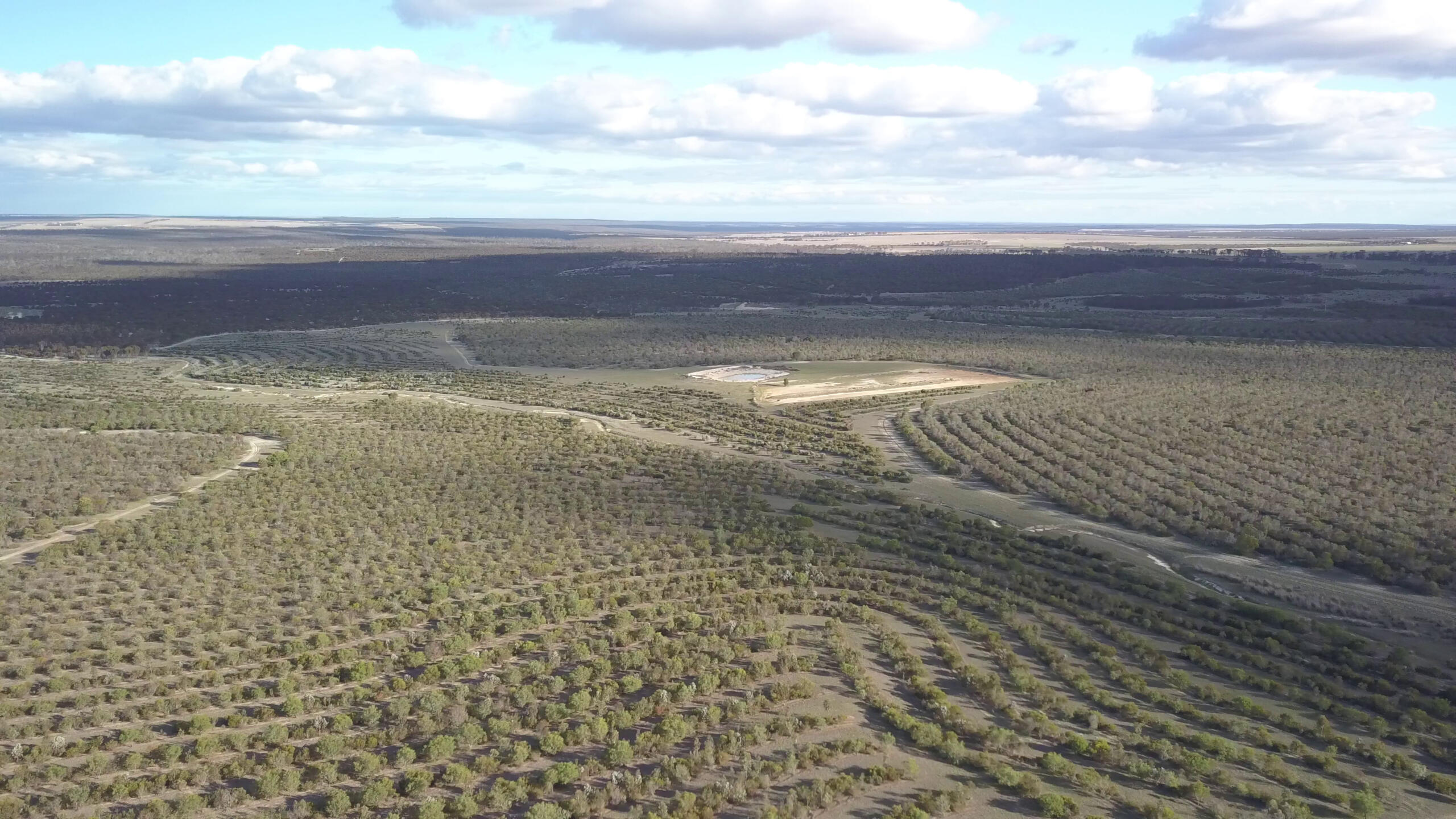
The Peniup property sits approximately 160km northeast of Albany in the Great Southern Region of Western Australia — a landscape recognised globally for its biodiversity. The Southwest Australian Floristic Region, within which Peniup sits, is one of only 36 internationally designated biodiversity hotspots on Earth. Peniup is part of the Fitzgerald Biosphere Reserve — a UNESCO-recognised area buffering the flora and fauna-rich Fitzgerald River National Park, home to over 2,500 described vascular plant species, more than 100 of which are endemic to the biosphere. In 2007, Greening Australia and Bush Heritage Australia jointly purchased the 2,406-hectare Peniup property. Greening Australia retained the northern 1,254-hectare lot; Bush Heritage manages the southern 1,152-hectare lot, now Beringa Reserve. The Peniup land had been long-cleared farmland prior to restoration. Even before revegetation began, more than 242 plant species were recorded across 164.9 hectares of remnant vegetation on the property — including Tall Mallee, Mallee Heath, Open Mallee Heath, Moort Woodland and Yate Woodland systems. These eight distinct vegetation communities, mapped to the soil types across the property, became the ecological reference point for the restoration design.
⚠ Placeholder: Ecologist or GA staff quote — to be supplied by GA comms / science team
Project location map Great Southern Region, WA · ~160km NE of Albany
|
|
Peniup sits within the Fitz-Stirling link of Gondwana Link — a 1,000km corridor reconnecting the wet forests of southwest WA to the semi-arid woodlands of the Nullarbor. The restoration directly links the Stirling Range and Fitzgerald River national parks, contributing to one of Australia’s most significant landscape-scale conservation programs. A neighbouring property, Nowanup, has since been returned to Noongar ownership, extending the cultural and ecological significance of this corridor.
Carbon sequestration
The Peniup project has generated more than 65,000 ACCUs since registration in 2015, with the crediting period running through to 30 June 2037. Credits are produced under the Reforestation by Environmental or Mallee Plantings (FullCAM) methodology — the only planting-based ACCU method that requires permanent, mixed-species, locally native revegetation of previously cleared land.
Issued (actual)
Projected to 2037
How EP methodology and FullCAM work →
|
200
stems per hectare
FullCAM baseline
|
[X,XXX]
stems per hectare
Peniup actual
|
Canopy plants at a higher species diversity and stem density than the government modelling baseline requires. This is a direct indicator of credit integrity — more biomass, more permanence, more ecological function per hectare.
Why stem density matters for credit quality →
Biodiversity and habitat
Bird surveys at Peniup have confirmed a species diversity comparable to undisturbed native bushland — benchmarked against what would be expected in equivalent intact vegetation, not just what was planted. Species confirmed on or supported by the site include:
| Black-gloved (Brush) Wallaby | Macropus irma | |
| Tammar Wallaby | Macropus eugenii derbianus | |
| Western Whipbird | Psophodes nigrogularis oberon | Vulnerable — EPBC |
Bird monitoring across spring 2008, 2009 and 2010 (Bush Heritage Australia) recorded 13 species including Wedge-tailed Eagle, Brown Falcon, Singing Honeyeater and Yellow-rumped Thornbill — confirming the site supports a diversity of fauna consistent with intact native bushland.
What you can report
Credits from Peniup sit within an internationally recognised biodiversity hotspot and contribute to a named, independently governed wildlife corridor. For buyers with nature-related disclosure obligations, Peniup supports verifiable claims across multiple frameworks.
|
Climate Active
ACCUs from this project are eligible under Australia’s Climate Active carbon neutral standard.
|
Kunming-Montreal GBF
Aligned to Target 2 (restore 30% of degraded ecosystems) and Target 4 (halt and reverse species decline).
|
|
TNFD
Supports nature-related financial disclosure. Gondwana Link status and three EPBC-listed species provide verifiable nature outcomes.
|
SBTi / BVCM
Eligible for Beyond Value Chain Mitigation under SBTi guidance. High-integrity nature-based credits for companies with science-based targets.
|
Project registration
| Project ID | EOP101147 |
| Project proponent | Canopy Nature Based Solutions Pty Ltd |
| Method type | Vegetation |
| Method | Reforestation by Environmental or Mallee Plantings — FullCAM Methodology Determination 2014 |
| Project activities | Permanent mixed-species environmental planting |
| Modelling approach | FullCAM 2016 |
| Registration date | 27 April 2015 |
| Crediting period | 1 July 2012 – 30 June 2037 |
| Permanence period | 12 December 2017 – 11 December 2117 (100 years) |
|
40+ years
Greening Australia restoration science behind every project
|
Largest EP producer
of high-integrity nature-based ACCUs in Australia
|
For-purpose
All profits reinvested into Greening Australia’s restoration programs
|
Peniup credits are available now
To discuss volume, pricing and retirement options, contact the Canopy team directly.